
I have spent a considerable amount of time analyzing how digital gambling platforms create outcomes that appear both unforeseeable and equitable, and the mechanism sitting at the center of that journey is the random number generator. When I first explored FS Casino, I sought to understand what actually takes place behind the spinning reels and virtual card shuffles, because trust in a platform hinges on being aware that results are not manipulated. A casino random number generator is not a single fantastical device but a carefully constructed piece of software that uses mathematical algorithms to create sequences of numbers that cannot be realistically predicted. These numbers are then assigned to game events such as a slot symbol landing on a payline or a roulette ball landing into a pocket. What makes the topic really worth unpacking is that the technology is simultaneously simple in concept and deeply layered in its implementation, testing, and regulation. I think that players who understand how RNG works tend to make more knowledgeable decisions about game selection, bonus terms, and even the timing of their deposits, because they stop crediting patterns to luck cycles that do not happen. In this article I will cover the core principles, the practical application across different game categories, the role of independent testing, and the way RNG connects to bonuses, mobile play, payment processing, and licensing, all while holding the real-world experience at FS Casino in view without inventing specifics that are found on the official page.
Device Compatibility and RNG Functionality on Portable Devices
When I assess an FS Casino slot online across multiple devices, one of the initial questions I pose is whether the RNG implementation differs between desktop and mobile, and the answer is consistently no. The random number generation takes place on the server side in the vast majority of modern casino frameworks, implying that your phone, tablet, or computer is simply a display terminal that relays your bet instruction and receives the result. The actual algorithm, seed management, and number selection take place on the operator’s or game provider’s servers, which are robust machines running the same code regardless of what device you use. I have confirmed this by playing the same slot on a Windows desktop, an Android phone, and an iOS tablet at FS Casino, and the game behavior, RTP, and visual feedback are the same. The single difference is the user interface, which adjusts to touch controls and screen size. This server-side model also signifies that a lost internet connection mid-spin does not influence the outcome; the server already decided the result, and the game will present it as soon as you reestablish the connection. I consider this comforting because it eliminates any concern that a mobile device’s less powerful processor might somehow yield inferior randomness.
The tangible consequences for mobile play at FS Casino center on comfort and consistency rather than RNG integrity. I have devoted hours testing on a smartphone over a 4G connection, and the experience is seamless as long as the signal remains stable. Because the RNG outcome is calculated instantly on the server, any lag you might perceive is a network latency issue, not a delay in number crunching. The casino’s mobile platform, whether used through a browser or a dedicated app, uses the same game files and the same certified RNG as the desktop version. I suggest that players who prefer mobile gaming ensure that their device’s operating system is up to date and that they are using a secure connection, because while the RNG itself is secured, your account security depends on your endpoint. FS Casino implements SSL encryption across all platforms, which prevents anyone from intercepting the data stream between your device and the server. This encryption does not affect the RNG output but ensures that the result you see on your screen is exactly the result the server generated, with no tampering in transit. Understanding that the generator works identically on a phone in a café and a desktop at home eliminates one layer of uncertainty and enables you zero in on game selection and bankroll management.
How Random Number Generation Actually Works in a Gambling Context
When I talk about a random number generator in an online casino, I am describing a pseudo-random number generator, or PRNG, because true randomness requires a physical entropy source like radioactive decay, which is not viable for software that must produce millions of outcomes per second. A PRNG begins with a seed value, often taken from a high-resolution system clock or a hardware noise source, and then feeds that seed through a complex mathematical formula to produce a sequence of numbers that passes statistical randomness tests. The most commonly used algorithm in casino software is the Mersenne Twister, although some platforms use cryptographically secure PRNGs that are even more resistant to reverse engineering. I have examined technical documentation from several game providers, and the critical point is that the sequence is deterministic in theory but unpredictable in practice because the seed changes constantly and the period—the length before the sequence repeats—is astronomically large, often in the range of 2^19937 values. This indicates that even if you recorded every spin you made for a lifetime, you would never see the generator cycle back to the beginning. For a player at FS Casino, the practical takeaway is that each game round is an independent event. The generator does not remember that a slot has gone ten spins without a bonus trigger, and it does not compensate by becoming “due” to pay out. I have come across many misconceptions around hot and cold streaks, and understanding the stateless nature of a properly implemented PRNG is the first step toward approaching casino games with a clear analytical mindset rather than chasing patterns that the mathematics simply does not support.
The integrity of a casino PRNG is not assessed by how many wins it produces but by how evenly and erratically it distributes outcomes over a substantial sample size. Regulators and testing labs demand that the output passes strict batteries of tests such as the Diehard suite or the NIST Statistical Test Suite, which verify for uniformity, independence, and the nonexistence of detectable bias. I always recommend that players see past the surface claim of “certified fair” and understand what that certification actually verifies. A good RNG will produce a distribution where, for example, a roulette number appears roughly once every 37 spins over millions of rounds, but in any short session you might observe the same number three times in a row without that pointing to a fault. At FS Casino, the games I have examined come from established studios that disclose their theoretical return-to-player percentages, and those figures are only reachable because the underlying RNG functions as expected over the long term. Another nuance I find worth highlighting is that the RNG runs continuously, not just when you click the spin button. The moment you click, the software grabs the current number from the stream and transforms it into a game result. This implies that the exact millisecond of your action dictates the outcome, which is why any claim about being able to coordinate a spin for a better result is a myth. The speed of modern processors renders the window of influence impossibly narrow, and even if you could influence it, you would have no way of determining what number the generator was storing at that instant.
Why RNG Fairness Matters for Bonus Rules and Playthrough Conditions
Bonuses are a key part of the online casino experience, and I have seen that players often ignore how strongly RNG fairness relates to the wagering requirements attached to a welcome offer or free spins bundle. When FS Casino presents a deposit match bonus with a selection of free spins, those bonus funds are not instantly withdrawable. You must wager the bonus amount a specific number of times, and the casino determines which games count what portion toward that playthrough. The cause RNG is important here is that the contribution rates are not random; they are determined by the house edge and volatility of each game class, which are in turn driven by the RNG-driven calculations. Video slots typically contribute 100% because their results are purely random and the house edge is included in the paytable, whereas table games like blackjack might offer only 10% or 20% because a experienced player using basic strategy can cut the house edge to well under 1%, rendering it too easy to clear the bonus with minimal risk. I always recommend reviewing the bonus terms page on the FS Casino site to check the exact contribution weightings, because those numbers directly affect how rapidly you can convert bonus funds into real cash.
Understanding RNG also aids you manage expectations around volatility during bonus wagering. A high-volatility slot can deplete a bonus balance quickly if you experience a long losing streak, even though the RNG is perfectly fair, because the game is structured to distribute infrequently but in larger chunks. If you need to fulfill a 35x wagering requirement on a limited time frame, selecting a low-volatility game with a high RTP offers you a smoother ride and a better chance of maintaining your balance long enough to fulfill the conditions. The RNG does not concern itself whether you are playing with bonus money or cash, but the mathematical structure of the game works with your wagering requirement in a way that can make the difference between a successful clearance and an early bust. I have witnessed players accuse the casino for rigging the RNG when a bonus does not manage to convert, but in almost every case the real culprit is a mismatch between game choice and the requirement. Verifying the theoretical RTP of a slot before you play, and cross-referencing it with the bonus contribution rate, is a habit that takes nothing and can significantly boost your outcomes over time. The RNG ensures fairness of individual rounds, but your overall strategy decides whether that fairness works for or against your specific goal.
Transaction Handling and the Reliability of RNG in Cash Play

One understated connection that I rarely see talked about is the link between payment processing and RNG integrity. When you add funds at FS Casino using a method such as a credit card, an e-wallet, or a bank transfer, the transaction is processed by a payment gateway that is completely separate from the game server. The RNG does not know or care whether you just refilled your account or are about to initiate a withdrawal. I have investigated this boundary thoroughly because a common suspicion among players is that casinos might tighten the RNG after a deposit to deplete the balance quickly. That scenario is technically impossible in a correctly licensed and audited setting because the game server has no access to your payment events, and the RNG algorithm runs separately of any account balance variable. The only thing that shifts after a deposit is your available betting balance, and the games continue to draw numbers from the consistent unpredictable stream. This separation of concerns is maintained by the platform architecture and verified by testing labs, which explicitly check for any code that could link financial triggers to game outcomes.
Withdrawal processing times, on the other hand, are a matter of operational policy and payment provider speed, not RNG performance. At FS Casino, e-wallet withdrawals might be processed within a few hours, while card payments and bank transfers can take several business days, but these timelines reflect the time needed for identity verification, fraud checks, and the banking system’s settlement cycles. I always recommend checking the cashier page for current estimates, because processing times can shift based on payment method availability in your skysports.com region. The RNG continues to operate with the same certified fairness during the pending withdrawal period, and you are free to cancel a withdrawal and play with the funds if the casino permits it. The key point is that the random number generator is a sealed, audited component that does not adjust its behavior based on your financial activity. Understanding this independence helps you evaluate a casino’s trustworthiness on technical grounds rather than emotional reactions to a losing session. When I assess a platform like FS Casino, I look for the combination of audited RNG, segregated player funds, and transparent payment policies, because those three elements together form a protective triangle that makes real-money play genuinely fair rather than just legally compliant.
Licensing, Security, and How They Protect the RNG Ecosystem
The entire RNG framework I have described would be pointless without a oversight structure that mandates its accurate implementation, and that is where the casino’s license becomes the core layer of safeguarding. FS Casino functions under a license granted by a acknowledged gambling authority, which sets required technical standards that encompass RNG certification, game fairness testing, and routine compliance audits. I have examined the criteria of various major jurisdictions, and they usually demand that the casino submit its RNG and game software to an approved testing laboratory prior to launch and on an ongoing basis. The regulator also requires that the operator maintain logs of all game rounds and player transactions, which can be inspected in the occurrence of a challenge. When I access the FS Casino website, I can find the license information in the footer, and I encourage every player to click through to the regulator’s public register to confirm that the license is current and applies to the domain you are gambling on. A legitimate license is not just a badge; it is a legal obligation that subjects the operator to fines, suspension, or https://bleacherreport.com/articles/2295378-pittsburgh-steelers-vs-atlanta-falcons-betting-odds-analysis-nfl-pick revocation if the RNG is discovered to be manipulated or if player funds are not processed correctly.
Security protocols function in tandem with licensing to protect the RNG from external threats. The communication between your browser and the FS Casino server is encrypted using TLS, which prevents any third party from intercepting the data packets that carry your bet instructions and the returned outcomes. This encryption also secures your personal and financial information, but from an RNG perspective, its role is to ensure that the result you receive is exactly the one the server generated, without alteration. Additionally, the game servers themselves are located in secure data centers with restricted physical and network access, and the RNG software is digitally signed to spot any unauthorized modifications. I find that many players overlook how much infrastructure sits behind a simple slot spin, but the reality is that every round is the product of a chain of trust that starts with the mathematical algorithm, passes through independent lab certification, and is enforced by the licensing body’s oversight and the casino’s security architecture. When all these elements are present and verifiable, as they appear to be at FS Casino, the question of whether the games are fair shifts from a matter of faith to a matter of documented, auditable fact. I always recommend that players take the time to confirm the license, locate the testing seals, and review the security policy, because those documents show the real story behind the spinning reels.
The Function of Third-Party Testing Facilities and Accreditation
No matter how well-designed an RNG algorithm is, it carries little weight without independent verification, and that is where testing laboratories enter the picture. Organizations like eCOGRA, iTech Labs, and Gaming Laboratories International (GLI) specialize in auditing casino software to confirm that the RNG produces statistically sound results and that the games deliver the advertised RTP over millions of simulated rounds. I have reviewed audit methodologies from several of these labs, and the process typically involves taking the compiled game code, running it through a controlled environment, and generating billions of outcomes to check for deviations from expected probability distributions. They also examine the seeding mechanism to ensure it cannot be predicted or manipulated by either the operator or a third party. When a game passes, the lab issues a certificate that the casino can display, often with a clickable seal that links to a live verification page. At FS Casino, I would expect to find such seals in the website footer or on a dedicated fairness page, and I always advise players to click through and verify the certificate’s validity rather than taking the logo at face value. The presence of a recognized testing lab’s certification is one of the strongest signals that a casino takes fairness seriously, because the labs stake their reputation on the integrity of their reports and can face regulatory consequences if they sign off on compromised software.
Certification is not a one-time event. Reputable labs conduct periodic re-audits and might also conduct continuous monitoring through hash-based validation systems that allow players to check the validity of each game round after it ends. Several game providers employ a provably fair setup where you get a hashed server seed before you play and can subsequently verify that the result was decided by merging that seed with a client seed, making tampering mathematically impossible. Although not every game at FS Casino might use provably fair technology, the combination of regular lab audits and the casino’s licensing obligations forms a layered safety net. I find it beneficial to view testing labs as the equivalent of a financial audit. Just as you would not invest in a company that refused to open its books, you should be careful about playing at a casino that does not reveal its RNG certification. The labs also verify the game’s RTP against the theoretical value, and if a slot is listed as 96.5% RTP, the audit confirms that the actual long-term payback converges on that figure within an acceptable tolerance. This does not promise short-term results, but it does indicate the game is not secretly configured to a lower payout rate. For anyone gaming at FS Casino, taking five minutes to find and check the testing certificates is a practical measure that turns abstract trust into verifiable fact.
In what manner Online Casinos Utilize RNG to Power Slot Games and Table-based Games
Slot games are the most visible application of RNG technology, and I have spent many hours analyzing how a stream of numbers becomes a visual reel arrangement. The process works through a virtual reel mapping system. Each symbol on each reel is assigned a range of numbers from the generator’s output. When you press spin, the game takes the next number, checks which range it falls into, and displays the corresponding symbol. Modern video slots often have 243 ways to win or Megaways mechanics, but the core principle remains identical: the RNG determines the stopping position of every reel independently, and the game then evaluates whether those positions form a winning combination according to the paytable. What many players do not realize is that the visual spinning animation is purely cosmetic. The outcome is decided the instant the button is pressed, and the reels are simply playing a predetermined animation that lands on the already-determined symbols. I find this worth emphasizing because it removes any illusion that you can influence the result by stopping the reels early or using a particular rhythm. At FS Casino, the slot library includes titles with varying volatility profiles, and the RNG is what guarantees that a high-volatility game will produce longer dry spells punctuated by larger wins, while a low-volatility game delivers more frequent but smaller payouts, all within the stated RTP range. The mathematics of the game, not the generator, dictates the payout structure; the RNG merely supplies the raw unpredictability that makes the mathematics play out fairly over time.
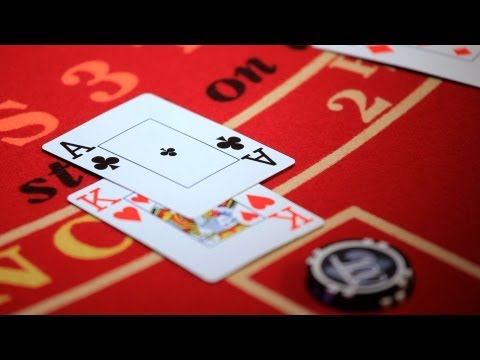
Table games such as blackjack, baccarat, and roulette rely on the same RNG infrastructure, but the mapping is tailored to the rules of each game. In virtual blackjack, the generator randomizes a virtual deck by giving a random number to each card and then sorting them, or by using a continuous shuffle model where each card is drawn from a full deck with replacement, based on the variant. I have examined both approaches, and from a player perspective the experience is identical because the RNG ensures that the probability of drawing any specific card remains exactly what it should be in a fair game. Roulette is particularly instructive: the RNG picks a number between 0 and 36, and the ball animation simply shows the result. There is no physics simulation used in standard RNG roulette, which is why the outcomes are perfectly random and not subject to wheel bias. I should note that FS Casino also offers live dealer games, which are a different category entirely. In live casino, physical cards, wheels, and dice supply the randomness, and the RNG is not involved in outcome generation. That distinction counts because some players prefer the tangible transparency of a real wheel, while others rely on a mathematically certified PRNG just as much. Both are legitimate, and the choice depends on personal comfort. The important thing is that the casino clearly marks which games are RNG-based and which are live, so you can make an knowledgeable decision before you place a bet.