

The Aviator no deposit deal places players inside a high-altitude flight deck where every round commences with a small plane departing and the potential winnings increasing on a visible multiplier meter. Rather than conventional reels, the game employs a single continuously rising coefficient that can collapse at any moment, converting the whole session into a competition between cashout timing and the hidden crash point. This mechanic creates a paytable that is not fixed in advance but is shown through the multiplier ladder players choose to depart from. Comprehending how that ladder is built, what the statistical payout is, and how variance impacts outcomes is vital for anyone who wishes to interpret the numbers rather than follow the spectacle. The subsequent sections break down each layer of the paytable, from the base calculation to the sophisticated multiplier strategies that experienced players use to control risk and reward.
Grasping the Core Multiplier Ladder
The reward table in Aviator is designed around a live multiplier that begins at 1.00× and climbs without preset intervals until the plane exits. Because the result is produced by a certified random number generator, each new round is separate, yet the visible ladder reflects a distribution curve that players can study through long-term observation. Early cash-outs near 1.20× or 1.30× represent the most frequent successful exits, while multipliers above 10.00× happen far less often. The ladder itself does not hold fixed payout symbols; instead, every spot on the rising meter matches to a probability-weighted slice of the overall return-to-player percentage. Players who view the meter as a dynamic paytable discover to connect their own exit points to the statistical likelihood of the plane still being airborne at that level, converting a seemingly simple graph into a personal odds table that can be tweaked from round to round.
Automatic Cash-Out Settings as a Custom Paytable
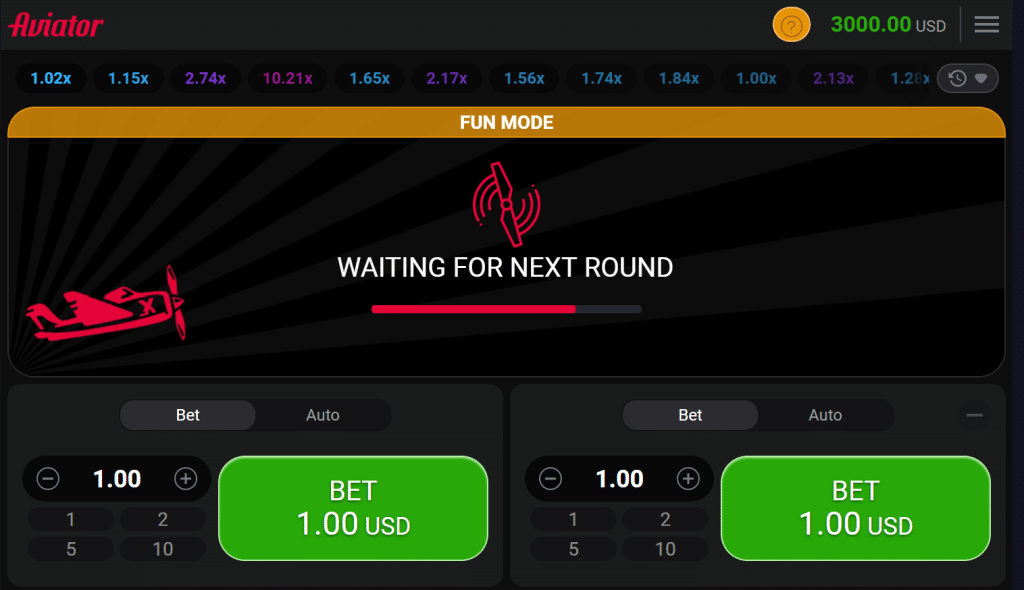
The auto cash-out feature allows players establish precise multiplier targets, in essence writing their own paytable lines before the round begins. Establishing an automatic exit at 1.75×, for example, secures that payout every time the plane stays aloft long enough, removing emotional decision-making from the equation. More advanced users pair two auto cash-outs on the dual-bet interface, one at a modest 1.50× for stable accumulation and another at 8.00× or higher for periodic larger wins. These preset thresholds function like fixed paytable entries that execute automatically, and they may be modified between rounds based on noted short-term trends or personal risk tolerance. Because the settings remain until changed, they also serve as a record of a player’s historical strategy, allowing later review of which exit points produced the most consistent results over hundreds of rounds.
Cryptographically Fair Validation and Round Transparency
Aviator releases a cryptographic seed for each round that players can verify after the fact, establishing that the crash point was determined before the betting window closed. This verification process serves as an external audit of the paytable itself, demonstrating that nor the operator nor the player can alter the multiplier once the round has started. Validating the hash needs copying the seed and result into an external calculator, a step that takes under a minute but offers concrete assurance that the published RTP corresponds to the actual distribution. Regular verification fosters confidence that the ladder displayed on screen mirrors genuine probability rather than hidden manipulation, and it motivates players to view the game as a measurable statistical exercise instead of a visual spectacle. Over time, users who routinely validate seeds also gain a deeper appreciation for how small changes in exit strategy impact long-term return.
Live Stats Dashboard and Viewing Real-Time Data
Each round feeds into a live statistics panel that displays the last twenty to thirty multipliers, providing players a rolling snapshot of recent distribution. While each outcome is independent, the panel assists users see where the current session stands relative to the long-term curve. A cluster of low exits could lead to tighter auto cash-out settings, whereas a run of medium multipliers might prompt a slight increase in target thresholds. The panel also records the highest multiplier of the day, week or month, providing context for how rare the largest payouts truly are. By cross-referencing personal results against these public figures, players can see whether their chosen paytable lines are performing above or below the expected frequency, turning raw data into actionable adjustments rather than relying on memory or intuition alone.
Theoretical payout Variance and the Underlying Distribution Curve
The stated RTP for Aviator lies within the typical 95–97 percent spectrum prevalent to crash-style games, although the precise figure can vary by operator configuration. Variance is remarkably high because the bulk of rounds conclude with low multipliers while a small percentage yield the outsized wins that hold the long-term average in accord with the stated RTP. This distribution means short sessions can swing dramatically: a player may see twenty exits below 1.50× followed by a single 25.00× cash-out that rebalances the session balance. Grasping this curve enables participants set realistic session goals instead of anticipating steady incremental gains. The volatility also clarifies why many experienced users separate their stake into two simultaneous bets, one conservative and one bold, effectively building a personal paytable that evens out the high-frequency low-return exits against the rarer high-return chances.
Practical Session and Record Keeping
Successful Aviator play begins with a detailed outline that specifies initial funds, maximum number of rounds, and the specific auto cash-out amounts that will be used throughout the session. Recording every exit multiplier alongside the corresponding stake creates a personal dataset that can be reviewed after fifty or one hundred rounds to identify which paytable lines are yielding the best results. If the data shows repeated underperformance at a chosen threshold, the player can shift that line upward or downward before the next session rather than carrying on with an unprofitable setting. Taking notes also prevents the frequent mistake of raising bets after losses in an attempt to recoup, because the documented boundaries act as a hard boundary. Over multiple sessions this disciplined approach transforms Aviator from a reactive gamble into a regulated test where each adjustment is assessed against tangible results.
Wager Range, Wager Sizing and Highest Exposure
Each round offers a minimum stake that commonly starts at 0.10 units and rises to several hundred units per bet, although individual platforms may set their own ceilings. Because the game features two concurrent bets per round, the total exposure per spin can double, demanding careful bankroll allocation. The maximum theoretical payout is theoretically unlimited, yet practical limits appear when multipliers exceed several hundred times the stake; at that point the probability of reaching such levels drops so sharply that the expected value turns negative. Players therefore view the upper end of the paytable as an open-ended tail rather than a target, centering instead on the middle ranges where the combination of frequency and multiplier size yields the best risk-adjusted returns. Adjusting stake size in response to recent crash patterns is a common tactic, but the independent nature of each round means past multipliers do not alter future probabilities.
Typical Exit Strategies and Their Payout Impact
Players commonly adopt one of three main exit strategies that directly shape their personal paytable performance. The first is the conservative ladder, where both bets are set to exit below 2.00×, prioritising frequency over size. The second is the balanced split, pairing a low exit with a higher target to secure occasional larger multipliers while protecting the majority of the stake. The third is the aggressive tail-chase, where one or both bets stay active past 10.00× in search of rare but substantial returns. Each approach bears its own statistical profile and session variance, and understanding these profiles allows players to fit strategy to bankroll size and session length. Over hundreds of documented rounds, the balanced split inclines to generate the steadiest equity curve, while the aggressive tail-chase displays the widest swings and the longest draw-down periods.
- Cautious ladder: both exits below 2.00× for consistent, low-variance accumulation.
- Even split: one exit near 1.60× paired with another near 6.00×–8.00×.
- Aggressive tail-chase: one or both bets left active past 10.00× for extreme potential.
Approaching Aviator through its paytable rather than its visuals transfers the focus from pursuing spectacular crashes to handling exit points with statistical intent. By considering auto cash-out values as custom paytable entries, confirming each round’s fairness, and maintaining detailed records, players gain concrete tools to assess performance over time. The next step is to start the game, set two modest auto cash-out targets based on the distribution patterns reviewed above, and track the first fifty rounds without deviation; the resulting data will uncover whether the chosen lines align with personal goals or require immediate revision.